

Multi-Species Veterinary Tonometry: What Changes Beyond Dogs and Cats
Why multi-species measurement is harder
Even dogs and cats create restraint and corneal variability. Rabbits, horses, primates, rodents, and exotic patients add more complexity. Globe size, corneal curvature, nictitating membrane position, eyelid tension, stress response, and body position can all affect readings.
Veterinary ophthalmology texts caution that IOP ranges and interpretation should not be separated from species and technique. A reading that seems ordinary in a dog or cat may not carry the same meaning in a rabbit or horse [1,2,5].
Rabbits and small mammals
Rabbits and rodents have small eyes, fast movements, and strong stress responses. Eyelid pressure and neck pressure should be minimized, and the probe should remain centered. Contact with eyelids or the nictitating membrane can distort readings.
Laboratory use adds a consistency requirement. Measurement time, anesthesia or sedation status, operator, posture, and device mode should be fixed whenever possible. Otherwise differences may reflect workflow rather than disease or experimental treatment.
Horses and large animals
Equine tonometry is often performed in a stall, aisle, or field environment. Lighting, head height, handler position, and sudden movement all affect safety. Stabilize the situation before chasing speed.
Equine uveitis, corneal disease, trauma, and glaucoma may all require IOP support. Avoid forcing the head position, tightening the halter, or pressing periocular tissue in ways that change the reading.
Species mode is not an “off switch” for judgment
Modern veterinary tonometers may provide species-specific modes. That is useful because anatomy and calibration can differ across species. But choosing the mode does not make every reading automatically correct.
The clinician still has to assess corneal quality, patient stability, repeatability, side-to-side difference, and whether the result matches the case. If mode, posture, or corneal status is uncertain, the record should say so.
Build your clinic’s own baseline
Clinics and research facilities that often examine exotic, equine, or laboratory patients benefit from internal reference records. Healthy animals measured with the same device, mode, time window, and restraint method are more useful for local comparison than numbers borrowed from mixed techniques.
This does not replace textbooks or research. It makes follow-up more reliable. In chronic uveitis, laboratory models, and postoperative monitoring, trend often matters more than a single threshold.
Related Product Information
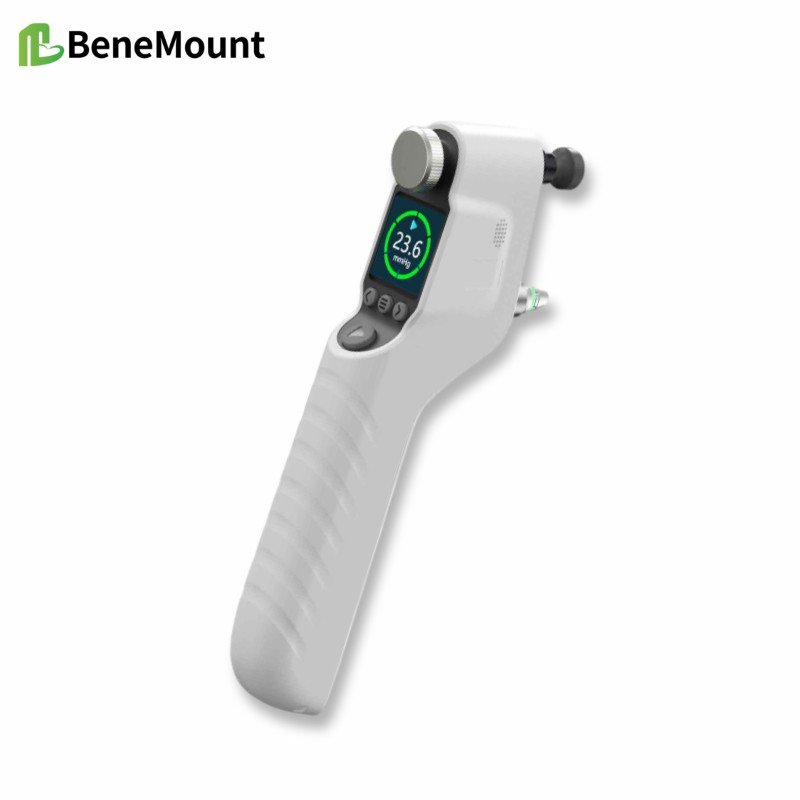
The Eagle Eye V700 materials show animal modes for canine, feline, lapine, equine, primate, rat, and mouse use. That is relevant for multi-species clinics and research facilities. In practice, each species still needs a fixed workflow, with mode, posture, data quality, and corneal condition recorded.
References
[1] Gelatt KN, Gilger BC, Kern TJ, eds. Veterinary Ophthalmology. Wiley-Blackwell. Local reference PDF.
[2] Maggs DJ, Miller PE, Ofri R. Slatter's Fundamentals of Veterinary Ophthalmology. Saunders/Elsevier. Local reference PDF.
[3] Gould D, McLellan GJ, eds. BSAVA Manual of Canine and Feline Ophthalmology. BSAVA. Local reference PDF.
[4] Companion Animal Ophthalmology. Local Chinese reference PDF.
[5] Small Animal Ophthalmology. Local Chinese reference PDF.
[6] Kontiola AI. A new induction-based impact method for measuring intraocular pressure. Acta Ophthalmologica Scandinavica. 2000;78(2):142-145.
[7] Knollinger AM, La Croix NC, Barrett PM, Miller PE. Evaluation of a rebound tonometer for measuring intraocular pressure in dogs and horses. Journal of the American Veterinary Medical Association. 2005;227(2):244-248.
[8] Product files for this week: Eagle Eye V700 veterinary tonometer, Chinese manual, quick guide, brochure, English manual, English quick guide, and English brochure. Product files were used only to verify model name, workflow cues, and visible specifications.