

Choosing a Veterinary Tonometer: Workflow Quality Matters More Than Specifications Alone
Start with the use case
Purchasing a veterinary tonometer can easily become a comparison of price and specifications. Clinical value begins with use case. Is the device for general screening, glaucoma emergencies, ophthalmology rechecks, exotic and equine patients, or research monitoring?
General practice needs speed, ease of learning, and good patient acceptance. Specialty ophthalmology needs repeatability and record quality. Research facilities need fixed modes, consistent data, and reproducible workflow. Use case comes before device judgment.
Functions that actually affect care
Repeated measurement and data quality feedback matter. IOP is not automatically reliable after one button press. Multiple readings and consistency indicators help clinicians recognize bad readings. Species modes also matter, especially beyond dogs and cats.
Probe management and infection control are equally practical. Disposable probes can reduce cross-contamination risk, but only if inventory and use policies are clear. If probes are reused or unavailable, the device advantage is weakened by workflow failure.
Training should cover actions and record language
Training should not stop at turning the device on and reading the screen. Clinicians and assistants should know restraint, probe distance, how to avoid eyelid and neck pressure, when not to measure, and what to do when quality indicators are poor.
Record language should also be standardized. A useful template includes device, eye, reading, number of groups, data quality, patient posture, corneal condition, and current medications. Consistent language makes rechecks, handoffs, and referrals clearer.
Follow-up workflow determines whether the device is used well
Glaucoma, uveitis, cataract workups, lens luxation, and postoperative cases all need serial IOP records. If every visit uses a different operator, posture, mode, and wording, trend interpretation becomes weak.
A clinic can run simple quality control by reviewing ophthalmic records monthly. Do records include both eyes, measurement quality, and clinical interpretation? If notes still say only “IOP high” or “IOP normal,” the device has not yet entered the clinic’s diagnostic system.
Consumables and maintenance are part of the purchase
Disposable probes, charging, battery status, software settings, automatic shutdown, cleaning, and storage all affect daily use. Managers should include consumable cost and inventory in the purchase plan, not just the device price.
The device should be easy to access. If the tonometer is locked away, probes are missing, or no one charges it, busy clinicians will skip IOP measurement. Procurement only works when the tool is ready at the point of care.
Related Product Information
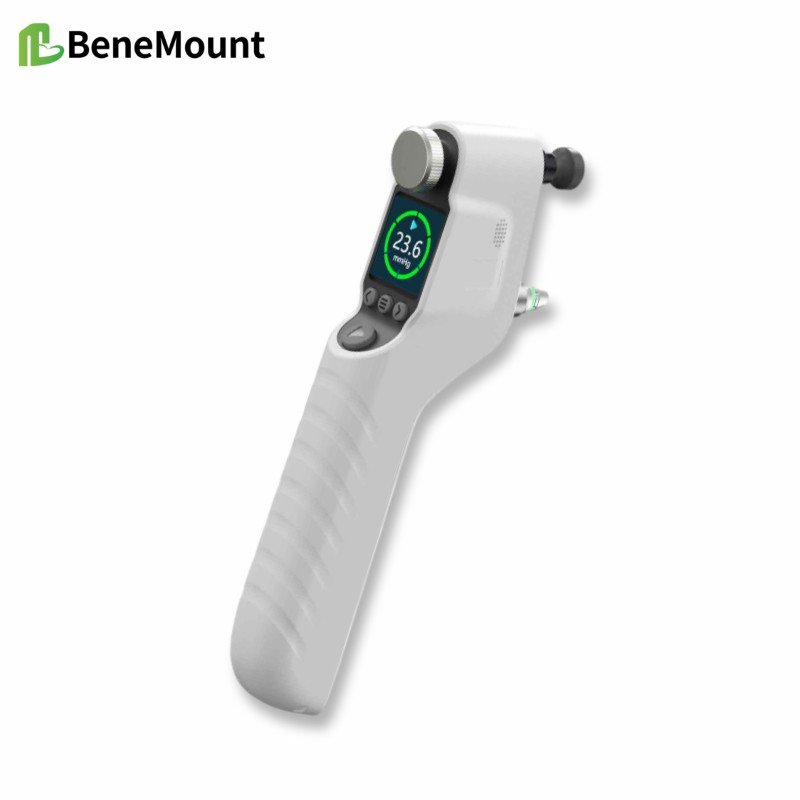
The Eagle Eye V700 materials show disposable probes, regular and quick measurement modes, animal mode selection, error prompts, automatic shutdown, and historical data storage. The brochure also indicates storage for 100 data groups with left and right eye distinction. For clinics, these features are most valuable when built into a standardized quality-control workflow.
References
[1] Gelatt KN, Gilger BC, Kern TJ, eds. Veterinary Ophthalmology. Wiley-Blackwell. Local reference PDF.
[2] Maggs DJ, Miller PE, Ofri R. Slatter's Fundamentals of Veterinary Ophthalmology. Saunders/Elsevier. Local reference PDF.
[3] Gould D, McLellan GJ, eds. BSAVA Manual of Canine and Feline Ophthalmology. BSAVA. Local reference PDF.
[4] Companion Animal Ophthalmology. Local Chinese reference PDF.
[5] Small Animal Ophthalmology. Local Chinese reference PDF.
[6] Kontiola AI. A new induction-based impact method for measuring intraocular pressure. Acta Ophthalmologica Scandinavica. 2000;78(2):142-145.
[7] Knollinger AM, La Croix NC, Barrett PM, Miller PE. Evaluation of a rebound tonometer for measuring intraocular pressure in dogs and horses. Journal of the American Veterinary Medical Association. 2005;227(2):244-248.
[8] Product files for this week: Eagle Eye V700 veterinary tonometer, Chinese manual, quick guide, brochure, English manual, English quick guide, and English brochure. Product files were used only to verify model name, workflow cues, and visible specifications.