

How to Reduce Rebound Tonometry Errors: Distance, Angle, Restraint, and Repeatability
Why rebound tonometry fits veterinary practice
Animals rarely behave like ideal human ophthalmology patients. Dogs turn their heads, cats retract their necks, rabbits and exotic patients become stressed, and horses may be examined outside a standard room. Rebound tonometry uses a small probe that briefly contacts the cornea and estimates IOP from the probe’s rebound behavior. It is portable and fast, which makes it useful in veterinary settings [6,7].
That does not mean technique is optional. IOP is easy to distort, especially when the animal is anxious, the clinician is rushing, or restraint is too forceful. Technique matters more than any device slogan.
Distance and angle are the first error gate
The product quick guide indicates that the probe should align with the center of the cornea and the probe head should be about 5-8 mm from the cornea. This is not decorative instruction. Too close and the approach becomes unstable; too far and the device may not collect a reliable rebound signal.
Angle matters as well. The probe should be as perpendicular as possible to the central cornea. If the patient moves, it is better to reposition than to chase the eye while pressing the button.
Gentler restraint often gives better data
Excessive restraint can change IOP. Neck pressure, tight collars, eyelid pressure, and pressure around the globe may raise readings. Cats are especially prone to unstable results when stressed or compressed around the neck.
Good restraint stabilizes the head without pressing on the eye or jugular area. In many cases, letting the animal stand or rest sternal, reducing crowding, and waiting a few quiet seconds improves the result. If the patient is extremely resistant, sedation, analgesia, or referral may be safer than turning measurement into a struggle.
Repeat measurement is not number shopping
Rebound tonometers usually collect multiple readings to reduce random error. If one group is widely scattered, the problem may be movement, angle, probe condition, or corneal disease.
The medical record should retain quality information. “Left eye 34 mmHg, two groups repeated, second group more consistent” is better than a naked number. If the device provides color or symbol quality indicators, poor-quality readings should be repeated rather than forced into the record.
Eyes that deserve extra caution
Deep corneal ulcers, suspected perforation, severe trauma, unstable postoperative wounds, and marked corneal infection require caution. IOP matters, but the eye should not be put at unnecessary risk just to obtain a number.
Corneal edema, scarring, pigmentation, dry eye, and irregular surfaces can also affect readings. In these cases, document the corneal condition and interpret IOP more conservatively.
Related Product Information
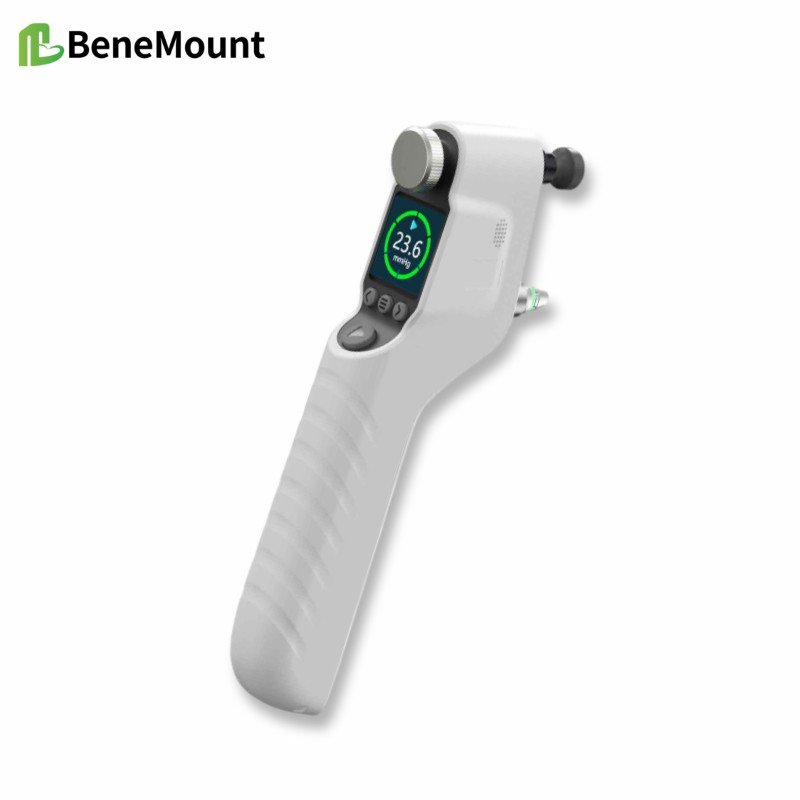
The Eagle Eye V700 quick guide shows disposable probes, regular and quick measurement modes, six readings per group in regular mode, quick acquisition within about two seconds, and green, yellow, or red data quality indicators. Clinically, these indicators should be part of quality control, not background decoration.
References
[1] Gelatt KN, Gilger BC, Kern TJ, eds. Veterinary Ophthalmology. Wiley-Blackwell. Local reference PDF.
[2] Maggs DJ, Miller PE, Ofri R. Slatter's Fundamentals of Veterinary Ophthalmology. Saunders/Elsevier. Local reference PDF.
[3] Gould D, McLellan GJ, eds. BSAVA Manual of Canine and Feline Ophthalmology. BSAVA. Local reference PDF.
[4] Companion Animal Ophthalmology. Local Chinese reference PDF.
[5] Small Animal Ophthalmology. Local Chinese reference PDF.
[6] Kontiola AI. A new induction-based impact method for measuring intraocular pressure. Acta Ophthalmologica Scandinavica. 2000;78(2):142-145.
[7] Knollinger AM, La Croix NC, Barrett PM, Miller PE. Evaluation of a rebound tonometer for measuring intraocular pressure in dogs and horses. Journal of the American Veterinary Medical Association. 2005;227(2):244-248.
[8] Product files for this week: Eagle Eye V700 veterinary tonometer, Chinese manual, quick guide, brochure, English manual, English quick guide, and English brochure. Product files were used only to verify model name, workflow cues, and visible specifications.