Understanding the Challenges of IOP Measurement in Horses
Accurate IOP measurement horses requires more than pressing a button. Large animals have thick corneas, strong eyelid reflexes, and heightened sensitivity to restraint. These factors can easily skew readings if posture, light, or technique vary. With reliable rebound tonometers such as the iFalcon V100 and Icare® TONOVET Plus, veterinarians can obtain consistent results—provided they follow species-appropriate handling steps.
Why Horses Pose Unique Tonometry Challenges
Unlike small animals, horses’ laterally positioned eyes make direct alignment difficult. Even subtle head movement alters venous pressure and shifts ocular readings. Learning to stabilize without compressing soft tissue is the key to repeatable results.
Preparing for Accurate IOP Measurement Horses
Environment and Patient Comfort
Testing should occur in a quiet, shaded space. Bright light triggers blinking and head tossing, while noise raises heart rate and pressure. A calm environment helps keep equine IOP testing steady and minimizes the need for sedation.
Correct Position and Gentle Restraint
The horse should stand balanced, with its head at heart height and eyes facing forward. Avoid pressing the jugular vein or eyelids; both artificially raise readings. An assistant can steady the halter softly but must not hold the muzzle tightly.
Quick Setup Checklist
Dim lighting
Neutral head height
Calibrated tonometer, clean probe
Device Selection and Field Calibration
Rebound Tonometry for Large Animals
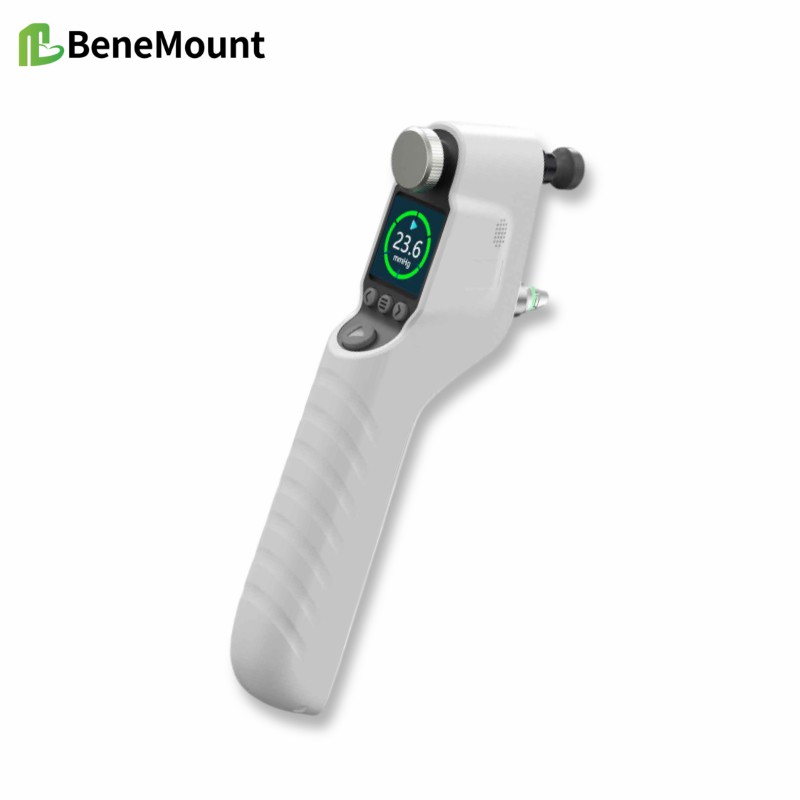
For most IOP measurement horses, rebound tonometers provide the best combination of accuracy and comfort. They require no anesthetic and only brief contact with the cornea. The iFalcon V100’s single-button control and built-in variance alert make it ideal for mobile work, while the Icare® TONOVET Plus suits hospital use with multi-mode data review.
Maintaining Accuracy Outdoors
Temperature swings between stable and pasture can affect sensor output. Let instruments adjust to ambient conditions before testing. The iFalcon’s aluminum shell resists drift, making it reliable for rural calls.
Performing Reliable Eye Pressure Testing in Horses
Handling and Alignment Technique
Stand beside the horse’s head and align the probe perpendicular to the cornea, 5–8 mm away. Shadows can trigger blinking, so ensure even lighting. If variation exceeds 10 %, pause and repeat after the horse relaxes.
Measuring Both Eyes for Comparison
Always test both eyes to detect asymmetry; a difference greater than 8 mmHg can signal early glaucoma or inflammation. Document environmental details—time, light, sedation—to make future readings comparable.
Handling Notes
Avoid touching eyelids
Allow short breaks between measurements
Discard probe tips after each patient
Sedation and Its Role in Tonometry for Large Animals
Drug Influence on Eye Pressure in Horses
Sedatives such as xylazine or detomidine typically lower IOP by reducing aqueous humor production. Ketamine can cause mild elevation when used alone. Record the drug, dose, and timing to avoid confusion between pharmacologic and pathologic change.
Balancing Calmness and Accuracy
Light sedation often helps excitable horses stay still long enough for proper readings. However, deep sedation may drop pressure excessively. Whenever possible, measure before sedation and note all variables afterward.
Clinical Benefits of Consistent IOP Measurement Horses
Early Glaucoma Detection and Follow-Up
Regular ocular pressure readings reveal gradual changes before vision loss occurs. Building a baseline during wellness exams allows veterinarians to spot abnormal trends quickly. Routine testing also improves client confidence in preventive eye care.
Broader Application Beyond Horses
The same rebound technique applies to cattle, camels, and donkeys with minimal adjustment. Calibration stability and gentle restraint remain the foundation for accurate tonometry across species.
Bringing It All Together
Accurate IOP measurement horses depends on calm conditions, correct posture, and properly maintained devices. Rebound tonometers like the iFalcon V100 and Icare® TONOVET Plus make equine eye-pressure testing straightforward, but true precision comes from consistent handling and thoughtful documentation. With routine practice, veterinarians can turn every measurement into dependable insight—and protect equine vision for the long term.